Debating Mission: Historical Trajectories, Contemporary Challenges, New Perspectives in Buddhism and Christianity.
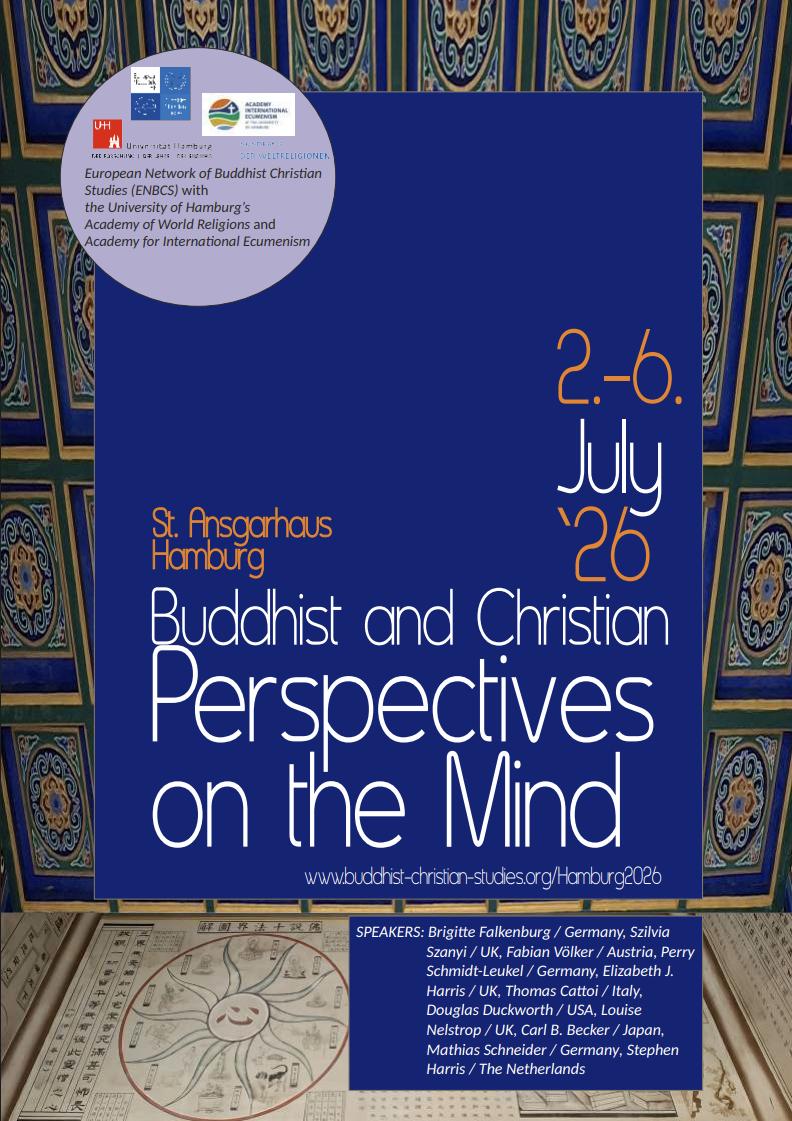
 17th International Conference of the European Network of Buddhist Christian Studies.
The conference seeks to create an interdisciplinary and interreligious platform for the comparative study of missionary thought and practice in Buddhism and Christianity. While the concept of „mission” has historically been more explicitly associated with Christianity, Buddhist traditions have likewise developed complex forms of transmission, propagation, ethical outreach, and social engagement that invite deeper comparative reflection. The conference aims to bring together scholars of Buddhism and Christianity in order to examine how both traditions have understood and enacted the communication of religious truth, compassion, liberation, salvation, and social responsibility across different historical and cultural contexts.
St. Ottilien 22 – 26 June 2028
 Aloysius Pieris, or Fr. Aloy, as many knew him, died at 6.00 a.m. Sri Lankan time on 22 March 2026, after a long period of increasing weakness and illness. He died, as he would have wished, at Tulana, the centre he founded in 1974 to facilitate discerning action (the meaning of the world ‘tulana’), research and interreligious encounter, particularly with Buddhism. He would have been 92 on the 9 th of April. During his life, face-to-face and through his writings, he touched the lives of thousands, as mentor, pastor, teacher, friend, academic adviser, indologist, liberation theologian and humanitarian.
 The Celestial Web: Buddhism and Christianity - A Different Comparison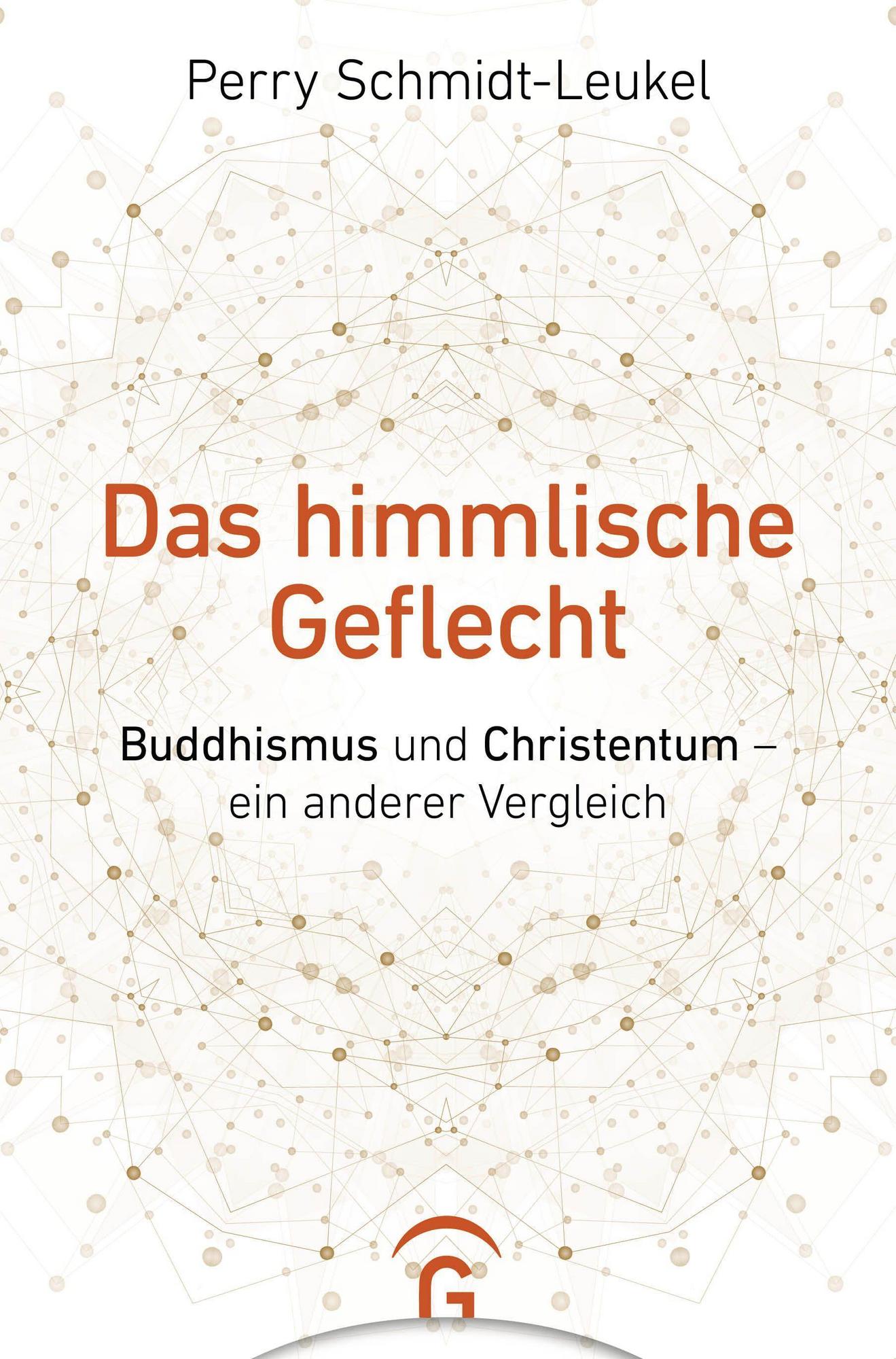
 On Saturday, October 11, 2025, during its annual conference at the Melchanthon Academy in Cologne, the
  On the Body
 Beyond Boundaries
 Euro-Buddhism and the Role of Christianity
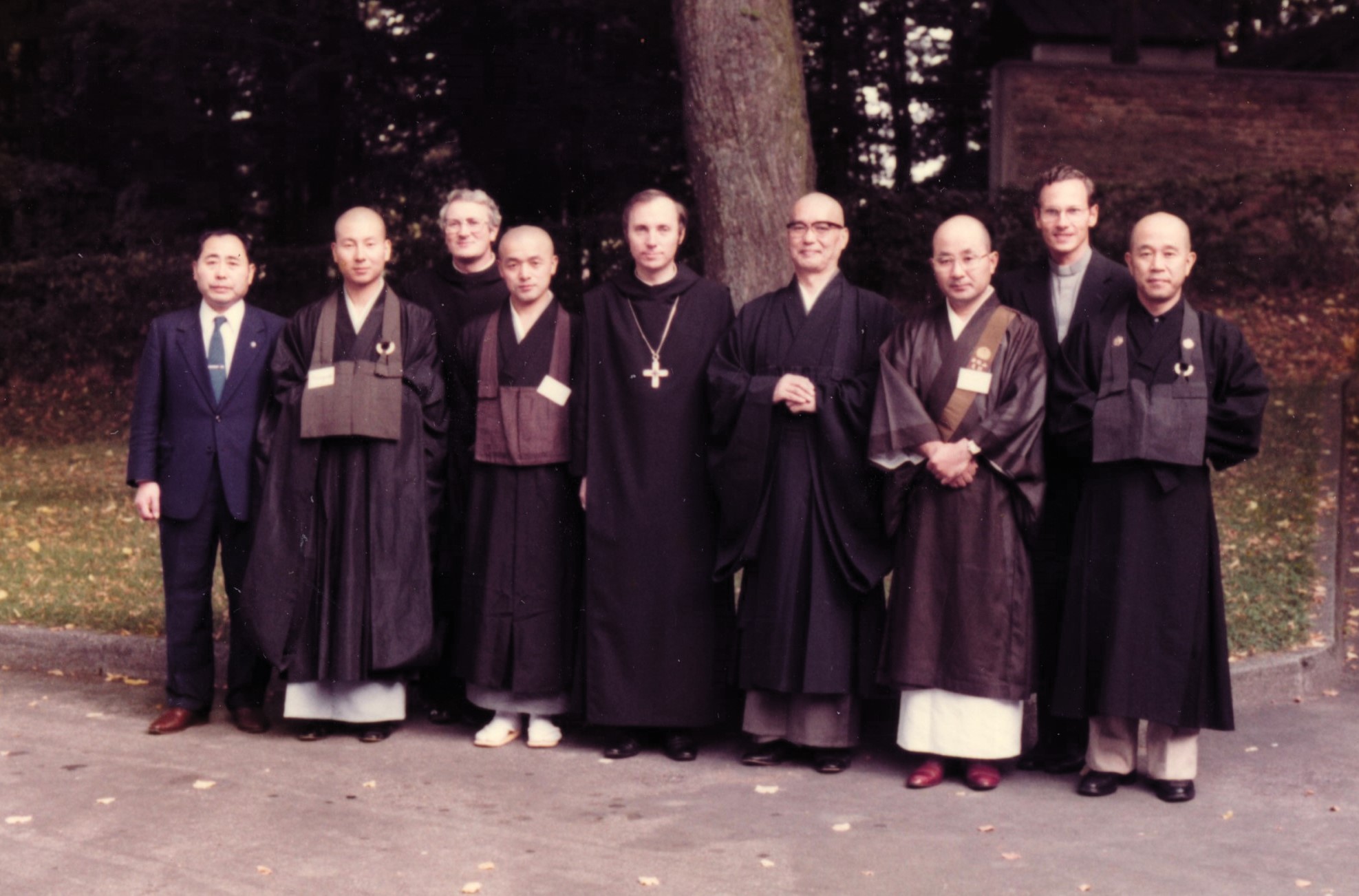
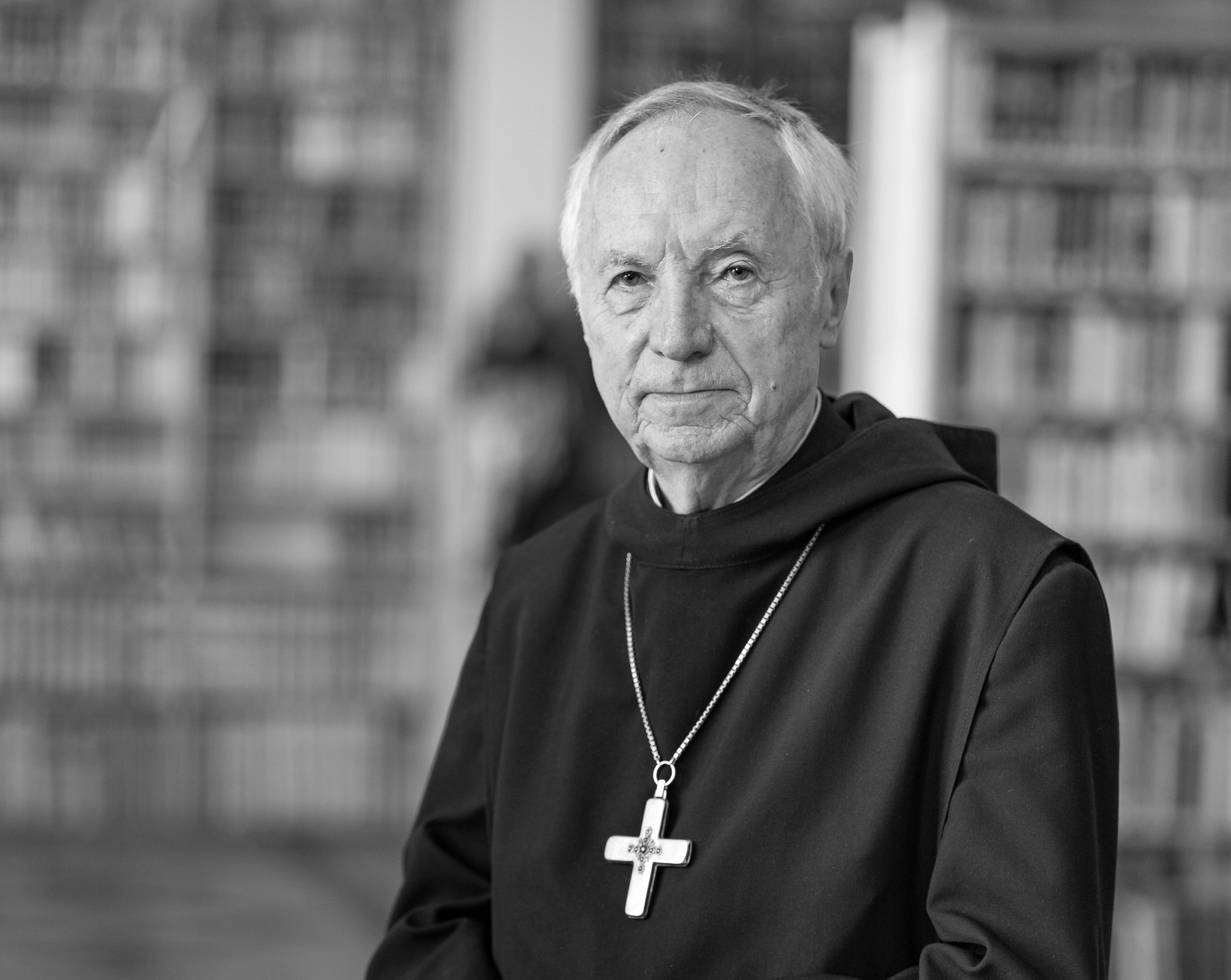 Very unexpectedly, Abbot Notker Wolf OSb of St. Ottilien died on April 2nd 2024. He was a pioneer in the dailogue of religions. As a young archabbot of St. Ottilien in 1979 he had invited a large group of buddhist monks and shintoist priests. This turned out to be a beginning of a long friendship between various Buddhist groups from East Asia and Ottilien, which continues til today. He also had generiously supported the work of the European Network of Buddhist Christian Studies. See also